• Entdecken Sie GEO+
    • GEO EPOCHE
  • Ressorts
    • GEO+
      • Eingelesene Artikel
      • Archiv GEO+
    • Reisen
      • Reisewissen
        • Reisen mit Kindern
        • Mikroabenteuer
      • Reise-Inspiration
        • TOP TEN
          • Die schönsten Städte Europas
          • Wandern in Deutschland
        • Traumziel der Woche
      • Reiseziele
        • Deutschland
          • Hamburg
          • Berlin
          • München
        • Europa
          • Frankreich
          • Island
          • Spanien
          • Italien
          • Griechenland
        • Fernreiseziele
          • Karibische Inseln
          • Australien
          • Japan
          • Südafrika
      • Reisewelten
    • Natur
      • Nachhaltigkeit
        • Nachhaltig leben
          • Tipps für den Haushalt
          • Zero Waste
      • Garten
        • Saisonkalender
      • Tierwelt
        • Tiervideos
        • Tierschutz
        • Haustiere
      • Ökologie
        • Klimawandel
        • Naturschutz
      • Naturwunder Erde
        • Naturphänomene
    • Wissen
      • Forschung
        • Weltall
          • Astronomie
          • Raumfahrt
          • Planeten
        • Hirnforschung
        • Quantenphysik
        • Archäologie
    • Gesundheit
      • Psychologie
      • Medizin
      • Sexualität
      • Schlaf
      • Ratgeber
        • Migräne und Kopfschmerz
        • Rückenschmerzen
        • Depression und Burnout
        • Gelassenheit und Balance
    • Ernährung
      • Darmgesundheit
      • Abnehmen
      • Vitamine
      • Rezepte
    • Geschichte
      • Deutsche Geschichte
      • Erster Weltkrieg
      • Zweiter Weltkrieg
      • Mittelalter
      • Historische Personen
        • Sisi
        • Nikola Tesla
        • Leonardo da Vinci
        • Che Guevara
    • Fotografie
      • Reisefotografie
      • Naturfotografie
      • Tierfotografie
      • Landschaftsfotografie
    • Quiz
      • Geografie-Quiz
      • Geschichts-Quiz
      • Frage des Tages
      • Reisequiz
      • Naturquiz
    • Die Welt von GEO
      • GEO
      • GEOlino
      • Die Redaktion
      • Dirk Steffens
      • Nachhaltigkeit bei GEO
      • Partner und Vereine
        • GEO schafft Wildnis e. V.
        • GEO schützt den Regenwald e. V.
        • GEO Television
        • 360° - GEO Reportage
    • Vergleiche
      • Gewichtsdecken-Test
      • Taschenlampen-Test
      • Stirnlampen-Test
      • Tageslichtlampen-Test
      • Schneeschuhe-Test
      • Shopping-Tipps
        • Outdoor-Tipps
        • Pflanz-Tipps und Gartenhelfer
        • Haustier-Produkttipps
  • Medien
    • Audio
    • Video
  • Services
    • Newsletter
    • Gewinnspiele
    • Spiele
      • Logikrätsel
      • Sudoku
      • Tetris
      • 2048
      • Mahjong
      • Ballino
      • Juwelentausch
      • Galgenmännchen
    • Aboshop
    • Kontakt
    • Partner von stern
  • Folgen Sie GEO auf
    • Instagram
    • Pinterest
    • Facebook
Zum Inhalt springen
Abo testen Login
  • GEO+
  • Reisen
  • Natur
  • Forschung
  • Gesundheit
  • Ernährung
  • Psychologie
  • Geschichte
  • Quiz
  • Fotografie
  • Die Welt von GEO
  • GEO EPOCHE
  • Audio
  • Video
  • Aboshop
  • Vergleiche
  • Wissen
  • Nachhaltigkeit
  • Natur
  • Tierwelt
  • Close-up Photographer of the Year: die Gewinner

Zur Galerie Close-up Photographer of the Year: die Gewinner
// © Bernhard Schubert-Magic Spores-CUPOTY03-Insects-3rd//  //CREDIT// © Bernhard Schubert | cupoty.com  3rd Place: Insects  //NAME// Bernhard Schubert  //TITLE// Magic Spores  Nationality Austrian  Occupation Student  Further information: Website: www.bernhardschubert.com, Instagram: bernhardschubertphoto, Facebook: bernhardschubertphoto      Bernhard:  ‘I observed and captured this scene during a night hike in the tropics of Borneo. A bracket fungus releases masses of spores, which causes the refraction of light while a cockroach feeds. I never observed this phenomenon before and I was compelled to capture it in all its beauty.’      Technical details:  Canon EOS 5D IV, Tamron 35mm DI VC 1.8, ISO 800 1/200secs at f/16  Accessories: External flash  Post processing: Basic adjustments in Lightroom
Bernhard Schubert befand sich auf Borneo und war dort unterwegs auf einer Nachtwanderung, als er diese Szene erblickte. Fasziniert von der Szenerie, drückte er umgehend auf den Auslöser seiner Kamera. Auf der Makroaufnahme zu sehen ist ein Klammerpilz, der große Mengen an Sporen freisetzt, die eine Lichtbrechung verursachen. Im Vordergrund frisst eine Kakerlake. Der aus Österreich stammende Student machte damit den dritten Platz in der Kategorie "Insekten".
© Bernhard Schubert | cupoty.com
Zurück Weiter
Weitere Bilder dieser Galerie

//© Pal Hermansen-Insect diversity-CUPOTY03-Insects-1st//  //CREDIT// © Pål Hermansen | cupoty.com  Insects and Overall Winner of Close-up Photographer of the Year 03  //NAME// Pål Hermansen  //TITLE// Insect Diversity  Nationality: Norwegian  Occupation: Photographer / Author / Dentist  Further information: Website: www.palhermansen.com      Pål:  ‘In the autumn of 2020, I discovered that one of the lamps on my house in Norway had a defect and had acted as a light trap for insects. I emptied the lamp and spread the contents onto a large light-table I had left over from my slide days. I used a weak flashlight to light the details from above. I wanted to express the chaos and diversity of this discovery, but also to find some kind of composition. To me, it’s a visual reminder of the important and extreme diversity of animals around us that we take for granted.’      Technical details:  Hasselblad H3D 39, Hasselblad 120mm f/4 macro, ISO 50, 8secs at f/25  Accessories: Tripod, light-table and flashlight  Post processing: Basic adjustments in Photoshop
//© Barry Webb-Holly Parachutes-CUPOTY03-Plants-1st//  //CREDIT// © Barry Webb | cupoty.com  Winner: Plants & Fungi  //NAME// Barry Webb  //TITLE// Holly Parachute  Nationality British  Occupation Gardener / Photographer  Further information: Website: www.barrywebbimages.co.uk, Instagram: barrywebbimages      Barry:  ‘Last December, while cutting the hedge in my garden, I spotted what I thought were slime moulds, growing on this dead holly leaf. On closer inspection, I noticed amazing spikes coming out of the cap of these small, rare, Holly Parachute fungi, Marasmius hudsonii. I took the holly leaf into my greenhouse, out of the wind, and then spent some time carefully arranging moss behind, to create a pleasant background. I deliberately chose a composition using the pointed edges of the holly leaf as a frame and to echo the spikes of the little fungi. This is a 42 shot focus stack, combined in Zerene Stacker.’      Technical details:  Olympus OMD E-M1 Mark II, Olympus M.Zuiko Digital ED 60mm f/2.8 Macro, ISO 200, 1/10sec at f/4  Accessories: Gitzo Explorer tripod and cable release  Post processing: Zerene Stacker and basic adjustments in Lightroom and Photoshop
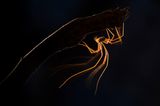
//© Juan Ahumada-Dancing in the Dark-CUPOTY03-Animals-1st//  //CREDIT// © Juan J. González Ahumada | cupoty.com  Winner: Animals  //NAME// Juan J. González Ahumada   //TITLE// Dancing in the Dark  Nationality Spanish  Occupation Official  Further information: Website: www.jjgahumada.com, Instagram: jjgahumada      Juan:  ‘This opilione (harvestman or daddy long legs) moves along a dry branch in a small hollow created by a landslip on the hillside of Sierra Blanca, Andalusia. These creatures are blind and use their front legs to guide themselves in the dark. With little space to move, I managed to light the subject from behind and used a 20 second exposure to capture the movement of its long legs.’      Technical details:  Canon EOS 6D, Canon 100mm f/2.8 Macro, ISO 160, 20sec at f/6.3  Accessories: Tripod and flashlight  Post processing: Minor cropping in Lightroom
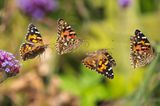
//© Andrew Fusek Peters-Painted Lady in the Garden-CUPOTY03-Butterflies-2nd//  //CREDIT// © Andrew Fusek Peters | cupoty.com  2nd Place: Butterflies & Dragonflies  //NAME// Andrew Fusek Peters  //TITLE// Painted Lady in the Garden  Nationality British  Occupation Photographer / Author  Further information: Website: www.andrewfusekpeters.com, Instagram: andrewfusekpeters, Facebook: Andrew Fusek Peters photography, Twitter: 2peters      Andrew:  ‘I had just had my cancer diagnosis in the autumn of 2019. I was waiting for surgery and could not go far so spent a lot of time in our garden. It was a wonderful late summer and lots of butterflies came to nectar on my wife’s flowers, including Verbena bonariensis.  I had just started shooting with the Olympus camera system and began to wonder if it might be possible to photograph butterflies in flight. Sports action sequences were my inspiration. If I got a set of shots at 60 frames per second, with the butterfly taking off in the plane of focus, set at the first shot, I thought they might make up an action sequence, a sort of time lapse in a single frame to show motion but also movement through a fraction of a second.  This was my first decent sequence, with four good Raw files from the moment the painted lady took off until it left the frame. The photos were layer masked in Photoshop to produce this composite. The result inspired me to really develop my butterfly in flight shots but this was the beginning point, a close up wonder revealing the painted lady in all its aerial glory.’      Technical details:  Olympus E-M1 Mk II, Olympus M.Zuiko 40-150mm F2.8 PRO, ISO 500, 1/5000sec at f/2.8  Post processing: Four Raw files layer masked in Photoshop to produce composite, basic adjustments
//© Andy Sands-Lachnum niveum-CUPOTY03-Plants-2nd//  //CREDIT// © Andy Sands | cupoty.com  2nd Place Plants & Fungi  //NAME// Andy Sands  //TITLE// Cup fungi Lachnum niveum  Nationality British  Occupation Retail Photographic Shop Owner / Photographer  Further information: Website: www.andysands.co.uk, Instagram: andysandsphotography      Andy:  ‘I collected a small piece of rotting wood with several of these tiny cup fungi on and took them back to my studio. They are approx. 0.75mm tall and have tiny hairs that trap moisture, which adds to their beauty.  Once collected I used an objective and tube lens assembly with focus rail to shoot multiple images for focus stacking. The depth of focus on the lens is tiny, so vibrations are a major issue with this sort of photography. This image is focus stacked from 127 images.’      Technical details:  Olympus OMD E-M1 Mark II, Olympus M.Zuiko Digital ED 60mm f/2.8 Macro, ISO 200, 1/10sec at f/4
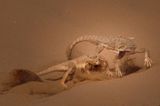
//© Svetlana Ivavnenko-Fight-CUPOTY03-Animals-2nd//  //CREDIT// © Svetlana Ivavnenko | cupoty.com  2nd Place Animals  //NAME// Svetlana Ivavnenko  //TITLE// Fight  Nationality Russian  Occupation Photographer  Further information: Instagram: svetlana_ivanenko70, Facebook: SvetlanaiIvanenko      Svetlana:  ‘During spring these Secret toadhead agamas battle over territory. It is difficult to capture these short and intense conflicts. The temperature in Kalmykia, Russia doesn’t help either, as it often rises above 30°C.’      Technical details:  Sony RX10M4, ISO 400, 1\6400sec at f/6.3, ISO 160, 20sec at f/6.3  Accessories: None  Post processing: Photoshop
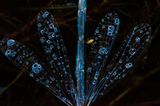
// © Aniket Thopate-Damsel in Dinner-CUPOTY03-Butterflies-3rd//  //CREDIT// © Aniket Rangnath Thopate | cupoty.com  //HEADLINE// 3rd Place: Butterflies & Dragonflies  //NAME// Aniket Rangnath Thopate  //TITLE// Damsel in Dinner  Nationality Indian  Occupation Freelance Photographer  Further information: Instagram: aniket_thopate, Facebook: aniket.thopate.7      Aniket:  ‘Last year (2020), near my home in Badlapur, India, my friends and I were walking through the pools of water formed by the monsoon and found this dead damselfly floating on the surface. I had never seen this arrangement of its four wings before with the beautiful droplets on them.  While shooting this on a 1:1 scale, I saw a movement near its head and spotted the nymph of a water strider, which added a tiny spot of intense colour.  I stayed in four feet of water for almost an hour watching the scene and capturing the image. I wonder sometimes, how nature comes up with such beautiful things.’      Technical details:  Nikon D750, Nikkor 105mm macro f2.8, ISO 1250, 1/200sec at f/29  Accessories: A big hat to prevent the sky reflecting in the water  Post processing: Basic adjustments in Lightroom and Photoshop
//© Petr Bambousek-Ants and Hornet-CUPOTY03-Insects-2nd//  //CREDIT// © Petr Bambousek | cupoty.com  2nd Place: Insects  //NAME// Petr Bambousek  //TITLE// Ants and Hornet  Nationality Czech  Occupation Freelance wildlife photographer  Further information: Website: www.sulasula.com, Instagram: sulasulacom, Facebook: sulasulacom      Petr:  ‘Liometopum ants live in large colonies on huge trees and feed on many different types of food. In the picture you can see how the group of ants work together in hunting the hornet. I used single diffused flash to light the scene and slightly cropped the image to take the viewer into the heart of the action. This interesting behaviour was discovered during a night walk in the extensive park of Lednice Castle, Czech Republic.’      Technical details:  Olympus E-M1 Mk II, Olympus 30mm/3.5 Macro, ISO 200, 1/100sec at f/13  Accessories: Flash, DIY diffuser, handheld
//© Enrico Somogyi-Gobys with Eggs-CUPOTY03-Underwater-3rd//  //CREDIT// © Enrico Somogyi | cupoty.com  3rd Place Underwater  //NAME// Enrico Somogyi  //TITLE// Gobys with Eggs  Nationality German  Occupation Caterer  Further information: Instagram: enricosomogyi, Facebook: enrico.somogyi      Enrico:  ‘This picture was taken in Anilao, Phillippines in 2017. A pair of gobys are sitting on a whip coral protecting their eggs. For the bubble bokeh I used a manual Meyer Optik Trioplan Lens, which is famous for this effect.’      Technical details:  Olympus E-PL6, Meyer Optik Trioplan 50mm, ISO 200, 1/320sec at f/4  Accessories: Archon V10 flashlight, DIY Snoot, structured acyl glass, Inon UCL165 Macro Wetlens  Post processing: Basic adjustments in Lightroom
// © Bernhard Schubert-Magic Spores-CUPOTY03-Insects-3rd//  //CREDIT// © Bernhard Schubert | cupoty.com  3rd Place: Insects  //NAME// Bernhard Schubert  //TITLE// Magic Spores  Nationality Austrian  Occupation Student  Further information: Website: www.bernhardschubert.com, Instagram: bernhardschubertphoto, Facebook: bernhardschubertphoto      Bernhard:  ‘I observed and captured this scene during a night hike in the tropics of Borneo. A bracket fungus releases masses of spores, which causes the refraction of light while a cockroach feeds. I never observed this phenomenon before and I was compelled to capture it in all its beauty.’      Technical details:  Canon EOS 5D IV, Tamron 35mm DI VC 1.8, ISO 800 1/200secs at f/16  Accessories: External flash  Post processing: Basic adjustments in Lightroom
  • Fotografie
  • Naturfotografie
  • Tierfotografie
  • Fotowettbewerb
27. Februar 2021,00:15
Newsletter

Von Gesundheit bis Fotografie Abonnieren Sie jetzt Ihren Lieblings-Newsletter von GEO

Produkttests und Preisvergleich
  • Heizlüfter
  • Drohnen
  • Schlafmasken
  • Steamer
  • Thermovorhang
Produkte & Tipps
  • Packliste Skiurlaub
  • Laufbekleidung im Winter
  • Smarte Thermostate
  • Wärmekissen
  • Nachhaltige Schuhe
  • Yogagurt
  • Komposttoilette
  • Yoga Zubehör
  • Boulderschuhe
  • Wanderhut

Empfehlungen der Redaktion

bunte Zeichnung eines kreativen Gehirns

Neurodivergenz Was macht ADHS-Gehirne so kreativ? Forschende finden überraschende Erklärung

Ein Schatten zeigt zwei Frauengesichter

Erziehung "Ich habe meine Augen zusammengepresst und gewartet, bis es vorbei ist"

zwei Gesichter vom gleichen Mann. Eins glücklich, eins traurig

Hochfunktionale Depression Wenn die Seele leidet und es niemand bemerkt

Eisberg

Polarwelt Der Eismann: Fotograf Sebastian Copeland im Einsatz für die Arktis

Illustration eines Kindes welches gemobbt wird

Konfrontative Pädagogik Wie man Mobbing wirksam unterbindet

Lebensstilveränderungen wie gesunde Ernährung und ausreichend Bewegung können bereits ein Akt der Selbstfürsorge sein und das Wohlbefinden bessern  

Bewusst essen Drei simple Regeln, wie Ernährung unser Wohlbefinden steigert

Britisch Kurzhaar-Katze

Tierpsychologie Der geheime Code der Katzen: Wie Forschende ihr Wesen entschlüsseln

Tägliche Notizen bewahren vor zu viel Schwarzseherei

Schreibübung Das Schwarz-Weiß-Tagebuch: Positiver Denken durch tägliche Notizen

Ob beim weihnachtlichen Fan-Singen im Stadion oder daheim hinter verschlossenen Türen: Körper und Seele profitieren überraschend vielseitig, wenn wir gemeinsam ein Lied anstimmen

Und jetzt: alle! Wie Singen Körper und Seele stärkt

Seetang im Öresund

Ozeanverdunkelung Unsere Meere werden immer trüber. Die Folgen sind gravierend

Spielszene 1939: Admiras Torwart Emil Buchberger kann dem Ball nur hinterhersehen

Skandal auf Schalke Wie ein Suizid den blau-weißen Mythos schuf

geo_epoche
Sparschwein betrachtet sich im Spiegel

Psychologie des Geldes So optimieren Sie Ihren inneren Finanzberater

Wer sich mit Licht und Schatten annehmen kann, schafft gute Bedingungen für sein Selbstwertgefühl 

Psychologie Die Quellen unseres Selbstwertes

Als das Beben begann, waren die Kirchen – hier die zerstörte Kathedrale – gut gefüllt. Viele Gläubige feierten gerade Allerheiligen

Erdbeben von Lissabon Eine Naturkatastrophe stößt die Welt in eine Glaubenskrise

geo_epoche
Ein verstohlener Blick auf einen nackten Körper, eine intime Situation: Schon startet das Kopfkino, oft ohne dass wir es steuern können

Sexualforschung Das Wesen der Lust: Wie der Kopf unser Begehren steuert

Ein siebenjähriges Kind spielt mit verschiedenen Requisiten (Steckenpferd, Schwert, Umhang u.a.)

Entwicklung Die unterschätzte Superkraft: Warum freies Spiel auf den Stundenplan gehört

Illustration Manching

Manching Vom Alltag in der Kelten-Metropole

geo_epoche
Wandschatten einer Person, die ein Weinglas in der Hand hält

Langsamer Absturz Bin ich schon süchtig? Wie sich Alkohol in unser Leben schleicht

Ein Mann am Strand mit den Händen einer Frau auf seinen Schultern

Sterben lernen Wie ein gutes Ende gelingen kann

Psychokardiologie : Wenn der Kopf das Herz aus dem Takt bringt

Psychokardiologie Wenn der Kopf das Herz aus dem Takt bringt

Mehr zum Thema

15 Bilder
Amos Nachoum/Siena International Photo Awards

Siena Photo Award Tierisch gut: Diese Naturfotos werden Sie staunen lassen

11. Januar 2023,15:45
20 Bilder
Close-up Photographer of the Year: Preisgekrönte Makrofotografie: Im Reich der Winzlinge

Close-up Photographer of the Year Preisgekrönte Makrofotografie: Im Reich der Winzlinge

26. Dezember 2025,10:26
10 Bilder
Grün-rot gestreifte Buckelzirpe sitzt auf einem Pflanzenstengel

Wunder Evolution Zehn skurrile Wesen vom Planeten Erde

25. Dezember 2025,08:35
20 Bilder
Whitsunday Islands aus der Vogelperspektive

Höhlen, Wüsten, Wasserfälle Von Bolivien bis Island: Die größten Naturwunder der Welt

24. Dezember 2025,10:45
14 Bilder
   Es entstand bei einer Aktion vom NaBu. Hier wurden die noch jungen Steinkauze aus ihrer Brutröhre geholt um sie zu beringen. Es war ein wundervolles Erlebnis 🥰  das Steinkauzduo im Kreis Coesfeld, beides NRW.   

Leser-Fotowettbewerb Faszination Tierwelt: Die schönsten Pärchenfotos des Jahres

24. Dezember 2025,09:22
Wie gerahmte Kunstwerke erscheinen die gefrorenen ­Fenster auf Peter A. Jeschkes alter Farm im Osten der USA. Das Licht der ­aufgehenden Sonne bricht sich in den Kristallstrukturen

Fotografie Eisblumen sind eine aussterbende Art. Eine Liebeserklärung

23. Dezember 2025,16:02
8 Bilder
Ungewöhnliche Freundschaft: Bär und Wolf streifen gemeinsam durch die Wälder

Ungewöhnliche Freundschaft Bär und Wolf streifen gemeinsam durch die Wälder

22. Dezember 2025,15:30
Autor Nils Johan Ruf und seine Familien am Weihnachtsbaum 1949

Traditionen Kein Fest ohne Foto: Was Weihnachtsbilder über uns verraten

19. Dezember 2025,11:50
123 Bilder
Dinosaurier auf einem Ast

Wissenschaftsbild der Woche Nicht Haar, nicht Feder: Mirasauras bizarrer Rückenfächer

Highlights der Woche

Das Wichtigste aus den Bereichen Forschung, Natur, Geschichte und Gesundheit.

Bitte geben Sie Ihre E-Mail-Adresse ein.

GEO.de schätzt Ihre Privatsphäre. Es gelten unsere Nutzungsbedingungen.

Weitere Inhalte
Beliebte Artikel zum Thema Tierwelt
  • Gehören Hund und Katze mit ins Bett?
  • Warum springen Wale?
  • Tierfotografie
  • Wie gefährlich sind die Schlangen auf Mallorca wirklich?
  • Evolution des Gehirns
  • Warum haben Zebras Streifen?
  • China: Die Qual der "Galle-Bären"
  • Welt der Affen
  • Kunstwerke des Kugelfischs
Archive
  • GEO Archiv
  • Themenübersicht
  • Über uns
  • Schreiben Sie uns Anregungen, Kommentare und Kritik
  • Impressum
  • Barrierefreiheitserklärung
  • Datenschutzhinweise
  • Verträge hier kündigen
  • Werbung
  • Datenschutz-Einstellungen
  • Kontakt
  • Presse

© G+J Medien GmbH

GEO plus

Weiterlesen mit GEO+

4 Wochen für 1 €. Jederzeit kündbar.

Jetzt testen

Bereits registriert? Hier anmelden