• Entdecken Sie GEO+
    • GEO EPOCHE
  • Ressorts
    • GEO+
      • Eingelesene Artikel
      • Archiv GEO+
    • Reisen
      • präsentiert von Center Parcs
        Naturparadiese in Deutschland
      • Reisewissen
        • Reisen mit Kindern
        • Mikroabenteuer
      • Reise-Inspiration
        • TOP TEN
          • Die schönsten Städte Europas
          • Wandern in Deutschland
        • Traumziel der Woche
      • Reiseziele
        • Deutschland
          • Hamburg
          • Berlin
          • München
        • Europa
          • Frankreich
          • Island
          • Spanien
          • Italien
          • Griechenland
        • Fernreiseziele
          • Karibische Inseln
          • Australien
          • Japan
          • Südafrika
      • Reisewelten
    • Natur
      • Nachhaltigkeit
        • Nachhaltig leben
          • Tipps für den Haushalt
          • Zero Waste
      • Garten
        • Saisonkalender
      • Tierwelt
        • Tiervideos
        • Tierschutz
        • Haustiere
      • Ökologie
        • Klimawandel
        • Naturschutz
      • Naturwunder Erde
        • Naturphänomene
    • Wissen
      • Forschung
        • Weltall
          • Astronomie
          • Raumfahrt
          • Planeten
        • Hirnforschung
        • Quantenphysik
        • Archäologie
    • Gesundheit
      • Psychologie
      • Medizin
      • Sexualität
      • Schlaf
      • Ratgeber
        • Migräne und Kopfschmerz
        • Rückenschmerzen
        • Depression und Burnout
        • Gelassenheit und Balance
    • Ernährung
      • Darmgesundheit
      • Abnehmen
      • Vitamine
      • Rezepte
    • Geschichte
      • Deutsche Geschichte
      • Erster Weltkrieg
      • Zweiter Weltkrieg
      • Mittelalter
      • Historische Personen
        • Sisi
        • Nikola Tesla
        • Leonardo da Vinci
        • Che Guevara
    • Fotografie
      • Reisefotografie
      • Naturfotografie
      • Tierfotografie
      • Landschaftsfotografie
    • Quiz
      • Geografie-Quiz
      • Geschichts-Quiz
      • Frage des Tages
      • Reisequiz
      • Naturquiz
    • Die Welt von GEO
      • GEO
      • GEOlino
      • Die Redaktion
      • Dirk Steffens
      • Nachhaltigkeit bei GEO
      • Partner und Vereine
        • GEO schafft Wildnis e. V.
        • GEO schützt den Regenwald e. V.
        • GEO Television
        • 360° - GEO Reportage
    • Vergleiche
      • Gewichtsdecken-Test
      • Taschenlampen-Test
      • Stirnlampen-Test
      • Tageslichtlampen-Test
      • Schneeschuhe-Test
      • Shopping-Tipps
        • Outdoor-Tipps
        • Pflanz-Tipps und Gartenhelfer
        • Haustier-Produkttipps
  • Medien
    • Audio
    • Video
  • Services
    • Newsletter
    • Gewinnspiele
    • Spiele
      • Logikrätsel
      • Sudoku
      • Tetris
      • 2048
      • Mahjong
      • Ballino
      • Juwelentausch
      • Galgenmännchen
    • Aboshop
    • Kontakt
    • Partner von stern
  • Folgen Sie GEO auf
    • Instagram
    • Pinterest
    • Facebook
Zum Inhalt springen
Abo testen Login
  • GEO+
  • Reisen
  • Natur
  • Forschung
  • Gesundheit
  • Ernährung
  • Psychologie
  • Geschichte
  • Quiz
  • Fotografie
  • Die Welt von GEO
  • GEO EPOCHE
  • Audio
  • Video
  • Aboshop
  • Vergleiche
  • Wissen
  • Nachhaltigkeit
  • Natur
  • Tierwelt
  • Streifenkauz im Siegesglück

Zur Galerie Preisgekrönte Bilder von Meise, Ralle und Kauz
Amateur Honorable Mention: Erin Boisvert  Species: Barred Owl  Location : Newtown, Connecticut  Camera: Sony a7 IV Mirrorless Digital Camera with a Sony FE 200-600mm F/5.6-6.3 G OSS lens; 1/500 second at f/6.3; ISO 3200  Behind the Shot: After many quiet hours of birding on a blustery December day, I saw a Barred Owl swoop through the trees. Two Red-tailed Hawks flew in the same direction. Screeching erupted, and I followed the sound to find the birds fighting over a squirrel impaled on a tree branch. The owl came out victorious, and the hawks retreated behind me. I watched in awe as the owl moved with the ease of an Olympic gymnast to keep an eye on the hawks and its dinner, and I captured this photo as it looked in my direction.  Bird Lore: The Barred Owl can’t thrive without areas of deep forest, but within that habitat it remains abundant because of its flexible behavior. The species feeds on a wide range of prey, including mammals, birds, snakes, frogs, fish, large insects, and crayfish. Its hunting patterns vary as well: Although it’s usually nocturnal like most owls, it will also hunt in daylight. One of its major predators is its larger cousin, the Great Horned Owl, which favors open areas—reason enough for the Barred Owl to stick to the deep woods.  Judge’s Take (Daniel Dietrich): This is an incredible moment caught by the photographer. We have all felt the challenges of photographing birds through thick branches. The photographer found the right line to have minimal branches blocking the subject and prey while capturing the position of the owl, which was likely hanging from the prey momentarily. Sharp and raw in nature, this image is a winner.  
Streifenkauz im Siegesglück
Dieser Streifenkauz hat Glück gehabt: Eben hat er zwei Rotschwanzbussarde in die Flucht geschlagen, jetzt behält er das erbeutete Eichhörnchen und die beiden Feinde im Blick, die sich irgendwo hinter Fotografin Erin Boisvert in Sicherheit gebracht haben. Streifenkauze sind zwar nachtaktiv, jagen aber manchmal auch tagsüber. Boisvert hat an diesem kalten Dezembertag viele Stunden gewartet, bis sie mit dieser Szene belohnt wurde.
© Erin Boisvert / Audubon Photography Awards
Zurück Weiter
Category: Amateur  Species: Blackburnian Warbler  Location: Promised Land State Park, Greentown, Pennsylvania  Camera: Nikon Z9 with a NIKKOR 500mm f/4G ED VR lens; 1/2500 second at f/4.0; ISO 1250  Behind the Shot: While out for a walk, I had been following the song of a Magnolia Warbler along a trail when two quarreling Blackburnian Warblers dropped from the trees above. They landed a few feet in front of me, prompting me to carefully step back. They remained motionless, and I worried that the fall had injured them, but a moment later they began battling again. Once I realized the pair were too busy to notice me, I slowly dropped to the ground at their level to get a better look into their world. I adjusted my settings for action and snapped as they fought. The scene lasted a few minutes before they let each other go and returned to the canopy.  Bird Lore: The fiery throat of the male Blackburnian Warbler might suggest tropical heat, but this long-distance migrant mostly avoids the hottest zones. On their South American wintering grounds on the slopes of the Andes, Blackburnians range through cool, moist forest and mix peacefully among flocks of resident tropical birds. On their breeding grounds in northeastern North America, they flit about in shady coniferous groves—but the scene can get heated as males fiercely compete to claim the best nesting territories.  Judge’s Take (Daniel Dietrich): This photo incorporates so much of what we all hope for in a spectacular image. The photographer had the knowledge to get very low to create a foreground and background that perfectly highlights the subject. The intense action is captured perfectly as the two animals grasp at each other’s beaks. The symmetry of the wing position and color of the birds are brilliant.
Amateur Award Winner: Tristan Vratil  Species: Great-tailed Grackle  Location: Austin, Texas  Camera: Canon EOS R5 with a Canon EF 100mm f/2.8L Macro IS USM lens and Viltrox EF-R2 Canon EF Lens to Canon RF Camera Mount Adapter; 1/6 second at f/13; ISO 400  Behind the Shot: As I drive home in traffic after a long workday, I look forward to witnessing a daily gathering of grackles. I lean onto my steering wheel to look up at the birds flying in a chaotic pattern and wonder whether other drivers notice their beauty. One evening, I grabbed my camera and tripod and set up at a corner gas station, positioning my lens to show the commonplace surroundings. I used a slower shutter speed to capture the flying birds’ hectic movements while keeping those perched on the power lines in focus.  Bird Lore: A century ago, Great-tailed Grackles in the United States lived only in southern Texas. Now widespread, they breed in colonies as far north as Minnesota and Idaho and often gather in large, communal roosts. City centers are popular spots for congregations, perhaps because fewer predators are around.  Judge’s Take (Lucas Bustamante): I fell in love with this image. It has much to tell: first and most importantly, that you don’t need to travel overseas or outside your city to find a spectacular moment. It also shows us that nature exists not only as an isolated or pristine environment, but also at the intersection of the wild with humans. And last but not least, the eye of the photographer to represent the action using movement and take this photo on-the-fly makes this a well-deserved winning image
Professional Honorable Mention: Kevin Lohman  Species: Forster’s Tern  Location: Mountain View, California  Camera: Nikon Z9 with a Nikon NIKKOR Z 600mm f/4 TC VR S lens; 1/6400 second at f/4.0; ISO 560  Behind the Shot: I watched Forster’s Terns flying over a lake and diving into the water, often coming up with small fish. Holding a long lens, I tried to keep the birds in the frame as they quickly flew out of the water, though it was difficult to predict where they’d emerge. I used a fast shutter speed, but the bright sky and the terns’ white feathers required that I watch my exposure. This tern popped up near me and did a quick shake, sending droplets in every direction. When it twisted its head to remove the water, it looked like it was flying upside down.  Bird Lore: Four species of medium-sized terns—Forster’s, Common, Arctic, and Roseate—look confusingly similar. What’s more, they forage in similar ways, by plunging from the air to capture small fish just below the water’s surface. But they differ in breeding habits. While the other three usually lay their eggs in simple scrapes on the bare ground of islands or beaches, the Forster’s is a marsh bird. It often builds a substantial nest of plant material in a clump of marsh vegetation or a similar support, such as on top of a muskrat house.  Judge’s Take (Sabine Meyer): The perfect moment of high-energy contortion makes this image explode right in front of us. We can almost feel the glistening water droplets splash onto our faces. The tern’s move is graceful, and the line of water coming out of its beak helps connect the composition from head to tail. I also love that this frame freezes the eye’s nictitating membrane as the bird blinks, a perfect capture.
Birds in Landscapes Prize: Kevin Lohman  Category: Professional  Species: California Quail  Location: Santa Cruz, California  Camera: Nikon D6 with a NIKKOR 180-400mm f/4E TC1.4 FL ED VR lens and Built-in 1.4x teleconverter; 1/800 second at f/5.6; ISO 560  Behind the Shot: It was close to sunset, and I was walking along an open area, looking for wildlife. I heard a California Quail and saw this male perched on top of a bush, acting as sentinel for his flock—ready to call out a warning if threats appeared. I moved to a spot where I could see layers in the landscape and snapped this image with a long lens. Having wildlife in the scene, as opposed to a simple landscape, makes for more of a special moment: The bird is only there fleetingly relative to everything else.  Bird Lore: The well-named California Quail was originally native throughout most of the state, as well as the Baja California peninsula and small parts of Oregon and Nevada. Within that range, coveys run on the ground in shrubby habitats like chaparral and sage scrub, avoiding both open desert and dense forest. That might suggest the species is picky about where it roams. But introduced populations have proven otherwise, thriving elsewhere in the West and even in such far-flung places as Hawai‘i, Chile, the Mediterranean island of Corsica, and New Zealand.  Judge’s Take (Daniel Dietrich): This is a familiar scene for me living in Point Reyes, and one I don’t take for granted. While close-up shots can be dramatic, stepping back can create wonderful results. While the landscape is simple, it is this quail’s home, his world. He sits as a protector over his covey in this beautifully captured image. The dramatic lighting, the fog, and bird position all come together so well here.
Amateur Honorable Mention: Erin Boisvert  Species: Barred Owl  Location : Newtown, Connecticut  Camera: Sony a7 IV Mirrorless Digital Camera with a Sony FE 200-600mm F/5.6-6.3 G OSS lens; 1/500 second at f/6.3; ISO 3200  Behind the Shot: After many quiet hours of birding on a blustery December day, I saw a Barred Owl swoop through the trees. Two Red-tailed Hawks flew in the same direction. Screeching erupted, and I followed the sound to find the birds fighting over a squirrel impaled on a tree branch. The owl came out victorious, and the hawks retreated behind me. I watched in awe as the owl moved with the ease of an Olympic gymnast to keep an eye on the hawks and its dinner, and I captured this photo as it looked in my direction.  Bird Lore: The Barred Owl can’t thrive without areas of deep forest, but within that habitat it remains abundant because of its flexible behavior. The species feeds on a wide range of prey, including mammals, birds, snakes, frogs, fish, large insects, and crayfish. Its hunting patterns vary as well: Although it’s usually nocturnal like most owls, it will also hunt in daylight. One of its major predators is its larger cousin, the Great Horned Owl, which favors open areas—reason enough for the Barred Owl to stick to the deep woods.  Judge’s Take (Daniel Dietrich): This is an incredible moment caught by the photographer. We have all felt the challenges of photographing birds through thick branches. The photographer found the right line to have minimal branches blocking the subject and prey while capturing the position of the owl, which was likely hanging from the prey momentarily. Sharp and raw in nature, this image is a winner.  
Fisher Prize: Douglas DeFelice  Category: Professional  Species: Common Gallinule  Location: Tarpon Springs, Florida  Camera: Canon R3 with a 600mm F4 lens; 1/1250 second at f/4.0; ISO 640  Behind the Shot: I was visiting A. L. Anderson Park, capturing images of wildlife as usual. I sat on a bench, observing two Common Gallinules as they rummaged for vegetation to eat. I noticed one diving underwater for food. I don’t see this behavior often, so I tried to capture the gallinule as it submerged. It was almost sunset, and the sun was backlit on the bird. I wanted to capture the water droplets, so I underexposed the image. I was lucky to snap this as the gallinule dove below the surface.  Bird Lore: The long, thin toes of the Common Gallinule reflect both its lifestyle and family tree. It’s related to rails, which prowl about dense marshes and wet mud, where their long toes help keep them from sinking. It’s also related to coots, which spend most of their time swimming. Coots have broad lobes along the toes’ edges, which serve like webbing on a duck’s foot for pushing against the water. The gallinule, which divides its time between the marsh and open water, lacks such lobes—perhaps making it more agile on land.  Judge’s Take (Daniel Dietrich): So often we are focused on eye contact or tight face shots. I love this image for its creativity, and the risk in submitting it. There is a beauty in the structure of the legs and the splashing water. The reflections in the water contrast the chaos above very nicely.
Plants for Birds Award Winner: Linda Scher     Category: Amateur  Species: Black-capped Chickadee  Location: Richfield, Minnesota  Camera: Nikon Z9 with a Nikon AF-S NIKKOR 500mm f/5.6E PF ED VR lens and a Nikon AF-S Teleconverter TC-14E; 1/1250 second at f/8.0; ISO 18000  Behind the Shot: I was walking around the Wood Lake Nature Center, an urban preserve that I often visit, when I saw several Black-capped Chickadees and goldfinches enjoying broad-leaf cattail seeds; this little guy was especially acrobatic and entertaining. I increased my ISO to keep my shutter speed fast enough to capture the quickly moving subject. I love birding in late summer, when seedeaters seem to have an endless supply of food.  Bird Lore: Because Black-capped Chickadees stay on their northern breeding grounds all year, they must adapt to the changing seasons. These tiny omnivores consume a wide variety of insects, seeds, small fruits, and other fare. Moving about their territories, they are constantly alert for new food sources. This chickadee is only a few weeks old, as indicated by its loose feathers and dusky cap, but it’s already exploring this seeding cattail.  Judge’s Take (John Rowden): To me, this image captures what many people love about Black-capped Chickadees—their big, inquisitive bird energy packed into a tiny body. The photo invites you into an ephemeral moment with the industrious bird bending the cattail to its will with no small effort on its part. The flying pieces of tiny fluff add action to the tableau, and the photo even contains a surprise: Zooming in you can see a tiny caterpillar in the chickadee’s bill. 
Youth Award Winner: Parham Pourahmad  Species: American Kestrel  Location: San Jose, California  Camera: Nikon D3500 with a Sigma 150-600mm f/5-6.3 DG OS HSM Contemporary lens; 1/1600 second at f/6.3; ISO 360  Behind the Shot: I found this kestrel pair eating insects and gravel to help them digest prey. I later saw them repeat these behaviors, except this time the male would fly up to the female and perch on her back to mate. Because pedestrians make kestrels skittish, I sat in the car with my mom, waiting to get a photo. Eventually, the male approached the female again. I clicked away, hoping to get his wings straight up to avoid any shadows. When I looked at my pictures, I found my favorite. The golden sunrise light and dark shadows of the hill make the image for me.  Bird Lore: Kestrels make up a group of more than a dozen falcon species, but the American Kestrel—widespread from Alaska to South America—is the only one in the Western Hemisphere. Nesting in tree holes and other cavities, the female does most of the egg incubating, while the male plays a major role in bringing food for hatchlings. The same birds typically pair up every breeding season as long as both are alive, but they often spend the winter separately, reuniting in spring.  Judge’s Take (Sabine Meyer): Such a classic beauty of a photo, with great warm light and saturated rich colors. The birds are caught in the act of mating and mesh together in an elegant composition that has just the right amount of negative space around the action.
Professional Award Winner: Liron Gertsman  Species: Willow Ptarmigan  Location: Kluane National Park, Yukon, Canada  Camera: Canon EOS R5 with a Canon RF 100-500mm f/4.5-7.1 L IS USM lens; 1/5000 second at f/7.1; ISO 1600  Behind the Shot: Perfectly adapted to harsh conditions of alpine and subalpine habitats, ptarmigan are famous for changing their feathers to match either snow in winter or rocky surroundings in summer—a mastery of camouflage that makes them difficult to find all year. When I spotted a covey moving through snowy terrain in whiteout conditions, I captured this high-key image as a group flew past.  Bird Lore: One of the most widespread grouse, the Willow Ptarmigan lives at snowy northern latitudes around the globe. It not only molts its brown feathers in winter, it also grows “snowshoes”: stiff feathers on the feet that help it walk atop the drifts. But there is regional variation. In the more temperate British Isles, the local subspecies (the Red Grouse) is dark brown all year.  Judge’s Take (Lucas Bustamante): This image awakens a feeling of peace and beauty in me, and this is precisely how I perceive nature. In addition, the accuracy of framing all the flying ptarmigans in a harmonious composition is impressive—as is the perfect contrast of the white snow and the birds with their black dots. The photographer truly freezes the art of nature!
Youth Honorable Mention: Edwin ​​Liu  Species: Red-necked Grebe  Location: Etobicoke, Ontario, Canada  Camera: Canon R5 with a Canon EF 400mm f/4 DO IS II USM lens; 1/1600 second at f/4.0; ISO 800  Behind the Shot: I went out early one June morning to see a Red-necked Grebe family that I had been observing on the shore of Lake Ontario. I had to wait for the right time and find the right place with good lighting conditions. To get an eye-level image, I put a tripod into the water and made sure it was just above the water’s surface. Things happened very quickly. Luckily, I managed to get the shot I wanted: this image that shows feeding behavior of parents and chicks in their habitat. Hard work brings luck.  Bird Lore: Grebes are often considered primitive birds, but they take a modern approach to family life: Both parents share essentially equal roles in raising their young, a relatively unusual avian dynamic. Together the male and female build a floating nest, anchored to marsh plants in shallow water. They take turns incubating eggs; then the hatchlings ride on the back of one parent while the other dives for aquatic creatures to feed them.  Judge’s Take (Daniel Dietrich): A superb photo timed perfectly by the photographer: The low angle creates a wonderful foreground with the reflection leading to a sharp, well-composed image of a tender moment in nature.
  • Tierfotografie
  • Vögel
  • Fotografie
  • Fotowettbewerb
27. Februar 2021,00:15
Newsletter

Von Gesundheit bis Fotografie Abonnieren Sie jetzt Ihren Lieblings-Newsletter von GEO

Produkttests und Preisvergleich
  • Heizlüfter
  • Drohnen
  • Schlafmasken
  • Steamer
  • Thermovorhang
Produkte & Tipps
  • Packliste Skiurlaub
  • Laufbekleidung im Winter
  • Smarte Thermostate
  • Wärmekissen
  • Nachhaltige Schuhe
  • Yogagurt
  • Komposttoilette
  • Yoga Zubehör
  • Boulderschuhe
  • Wanderhut

Empfehlungen der Redaktion

Ein 13-jähriger Junge starrt auf seinen Smartphone-Bildschirm

Social-Media-Verbot Digitalpionier erzieht seine Kinder "handyfrei". Hier erklärt er, wie das klappt

Nerven übertragen Signale über elektrische Impulse – etwa die Information, dass im Körper etwas schmerzt

Migräne bis Rückenleiden Wie Strom sanft Schmerzen lindern kann

Gezeichneter Blick auf den Innenhof einer prächtigen Moschee

Weltreich im Wandel Vom alten Persien bis heute: Den Iran verstehen in 87 Jahreszahlen

geo_epoche
Illustration eines aufgeschnittenen Kopfes, aus dem viele Elemente purzeln

Produktivität So arbeiten Sie mit dem Kopf statt gegen ihn

Mandy Mangler in Berlin

Gynäkologin Mandy Mangler "Sex mit Orgasmus ist gesünder als ohne"

Das ländliche Schweden dient Lindgren – hier 1952 fotografiert – für viele ihrer Geschichten als Schauplatz

Biografie Astrid Lindgren: Im Herzen immer Bullerbü

geo_epoche
Frau umarmt weissen flauschigen Hund vor schwarzem Hintergrund

Mitfühlende Wesen Kranker Mensch, kranker Hund? Wie unser Seelenleid Vierbeiner belasten kann

Foto einer Teenagerin, die mit Make-Up experimentiert

Pubertät bei Mädchen Zu früh in einem anderen Körper

Jederzeit können sich Paare heute über Kontinente hinweg sehen, sprechen und schreiben. Das führt zur "digitalen Eifersucht". Wer nicht reagiert, löst beim Partner womöglich Misstrauen aus

Partnersuche Wie kluges Online-Dating in langfristige Beziehungen führt

Treffen Sonnenteilchen auf die Erdatmosphäre, regen sie in hohen Schichten Gasmoleküle zum Leuchten an: Stickstoff strahlt blau oder violett, Sauerstoff rötlich, in niedrigen Höhen auch grün. Als im Januar 2026 Polarlichter selbst über Welzheim (Baden-Württemberg) am Nachthimmel tanzen, steckt hinter dem außergewöhnlichen Spektakel ein heftiger Sonnensturm

Sonnenstürme Polarlichter über Deutschland – schön, aber auch bedrohlich?

Resiliente Kinder erleben sich als wirksam: Wer spürt, dass er etwas kann, wächst an sich selbst

Erziehung Resilienz ist lernbar: Wie Kinder seelisch stark werden

Zwei Pferde als Gespann ziehen einen VW - Kleinbus

Ölkrise 1973 Ausgebremst im Ölrausch: Als Deutschland der Sprit ausging

geo_epoche
Unsere Gedanken entscheiden darüber, ob wir gestresst sind oder nicht. Stressmindernde Gedanken lassen sich trainieren 

Stress reduzieren Wie wir die innere Haltung verändern – und Gelassenheit finden

Detail einer Grapefruit unter Wasser

Von Muskeln bis Libido Wie Ihre Ernährung den Testosteronspiegel beeinflusst

Ein junger Mann mit blauben Augen blickt in die Kamera. Er trägt einen gelben Helm

Bergbau Unter Sardinien ruht ein Schatz. Europa braucht ihn

Willst du ein Brötchen? Lieber eine Banane? Oder doch die Knabber-Erdbeeren? Schon die Kleinsten dürfen entscheiden – auch, wenn sie ihre Meinung oft drei Sekunden später ändern

Demokratische Erziehung Was Kinder mitbestimmen sollten – und welche Entscheidungen sie überfordern

Die Versuchsanlage Wendelstein 7-X in Greifswald erschafft leistungsstarke Plasmen. Auch wegen ihr träumt die Bundesregierung von einer Weltmarktführerschaft im Bereich Kernfusion

Energie der Zukunft Kommt die Kernfusion? So realistisch ist der Traum vom Sonnenfeuer

Illustration eines Kopfes umgeben von Sonnenschein und Schmetterlingen

Psychologie Die Kraft der Manifestation: Wie positive Gedanken unser Schicksal beeinflussen

Tanzendes Paar

Hirnforschung Wie uns Tanzen klüger und gesünder macht

Mehr zum Thema

20. Februar 2026,16:01
9 Bilder
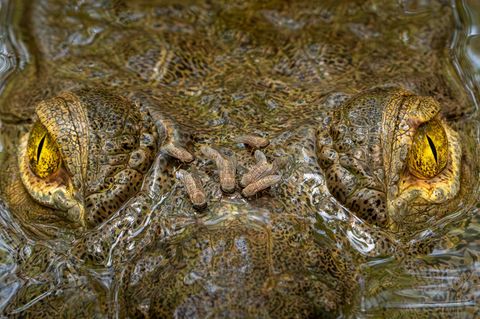
Direkten Blickkontakt mit dem Fotografen pflegt dieses Spitzkrokodil, während es stoisch die Stechfliegen auf seinem Kopf zu ertragen scheint. Eine gesunde Portion Selbstvertrauen brauchte der Fotograf und Biologe Zeke Rowe nicht nur bei der Aufnahme des Fotos, sondern auch, um seine Werke bei Wettbewerben einzureichen. Lange habe ihm dazu der Mut gefehlt, verrät der Gesamtsieger des Fotowettbewerbs "Capturing Ecology 2025".  Gesamtsieger "Capturing Ecology 2025": Zeke Rowe, "Wouldn’t Hurt a Fly"

"Capturing Ecology 2025" Von stoischen Krokodilen und falschen Schlangen: Naturfotografie zum Staunen

20. Februar 2026,06:00
14 Bilder
Koralle

Preisgekrönte Makrofotografie Diese Bilder zeigen die Schönheit der Natur im Detail

04. Februar 2026,09:11
11 Bilder
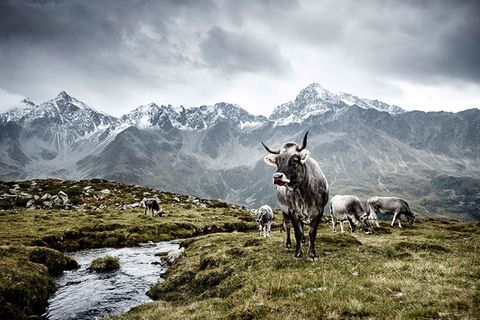
Tiroler Grauvieh, Osttirol, Österreich

Tierfotografie Fotografen schaffen kraftvolle Hommage an die Kuh

26. Dezember 2025,10:26
10 Bilder
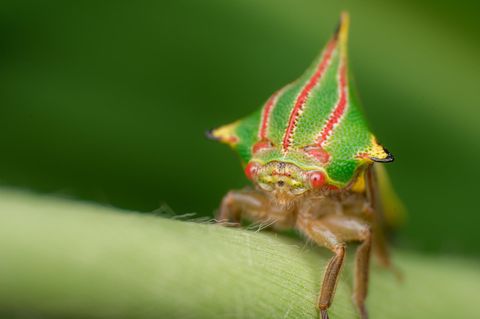
Grün-rot gestreifte Buckelzirpe sitzt auf einem Pflanzenstengel

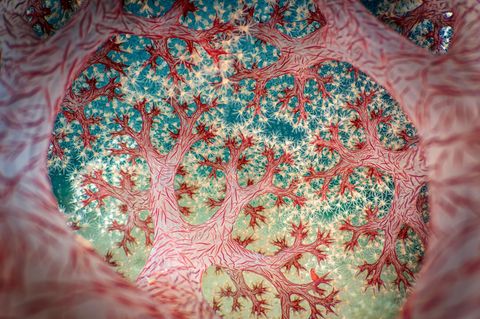
Wunder Evolution Zehn skurrile Wesen vom Planeten Erde

24. Dezember 2025,10:45
14 Bilder
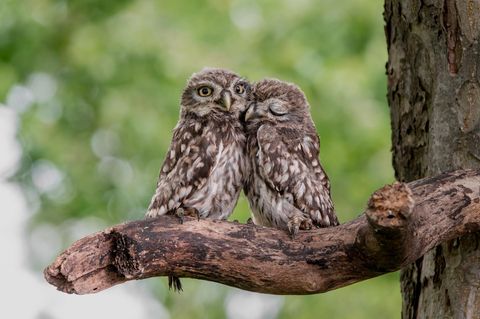
   Es entstand bei einer Aktion vom NaBu. Hier wurden die noch jungen Steinkauze aus ihrer Brutröhre geholt um sie zu beringen. Es war ein wundervolles Erlebnis 🥰  das Steinkauzduo im Kreis Coesfeld, beides NRW.   

Leser-Fotowettbewerb Faszination Tierwelt: Die schönsten Pärchenfotos des Jahres

23. Dezember 2025,16:02
8 Bilder
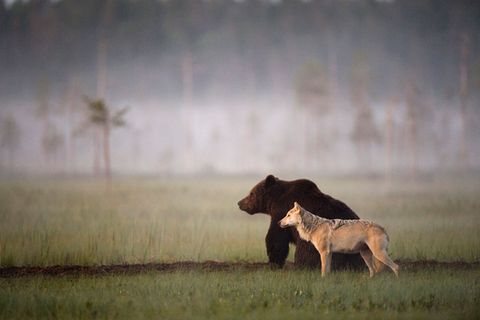
Ungewöhnliche Freundschaft: Bär und Wolf streifen gemeinsam durch die Wälder

Ungewöhnliche Freundschaft Bär und Wolf streifen gemeinsam durch die Wälder

17. Dezember 2025,09:00
15 Bilder
Japanischer Rotfuchs liegt glücklich im Schnee

Winterfreuden Fotos zum Schmunzeln: Diese Tiere feiern die kalte Jahreszeit

03. Dezember 2025,10:31
10 Bilder
Platz 1  "Bei meiner Fotoreise auf der Insel Helgoland begegnete ich zum ersten Mal einem Wintergoldhähnchen – und es war Liebe auf den ersten Blick. Um eine Perspektive auf Augenhöhe zu erhalten, legte ich die Kamera auf den Boden. Mein Herz pochte, und mein Finger klebte am Auslöser, während der winzige Vogel im Sekundentakt hin und her huschte. Plötzlich blieb er vollkommen still stehen und blickte direkt in die Kamera. Genau in diesem Moment entstand dieses Foto."

Fotowettbewerb Postkartenreif: Das sind die lustigsten Tierfotos der GEO-Leserschaft

11 Bilder
Sabrina Boem - Männer und Katzen

Tierliebe in Schwarzweiß Rührende Fotografie: Männer, die mit Katzen schmusen

Weitere Inhalte
Beliebte Artikel zum Thema Tierwelt
  • Gehören Hund und Katze mit ins Bett?
  • Warum springen Wale?
  • Tierfotografie
  • Wie gefährlich sind die Schlangen auf Mallorca wirklich?
  • Evolution des Gehirns
  • Warum haben Zebras Streifen?
  • China: Die Qual der "Galle-Bären"
  • Welt der Affen
  • Kunstwerke des Kugelfischs
Archive
  • GEO Archiv
  • Themenübersicht
  • Über uns
  • Schreiben Sie uns Anregungen, Kommentare und Kritik
  • Impressum
  • Barrierefreiheitserklärung
  • Datenschutzhinweise
  • Verträge hier kündigen
  • Werbung
  • Datenschutz-Einstellungen
  • Kontakt
  • Presse

© G+J Medien GmbH

GEO plus

Weiterlesen mit GEO+

4 Wochen für 1 €. Jederzeit kündbar.

Jetzt testen

Bereits registriert? Hier anmelden